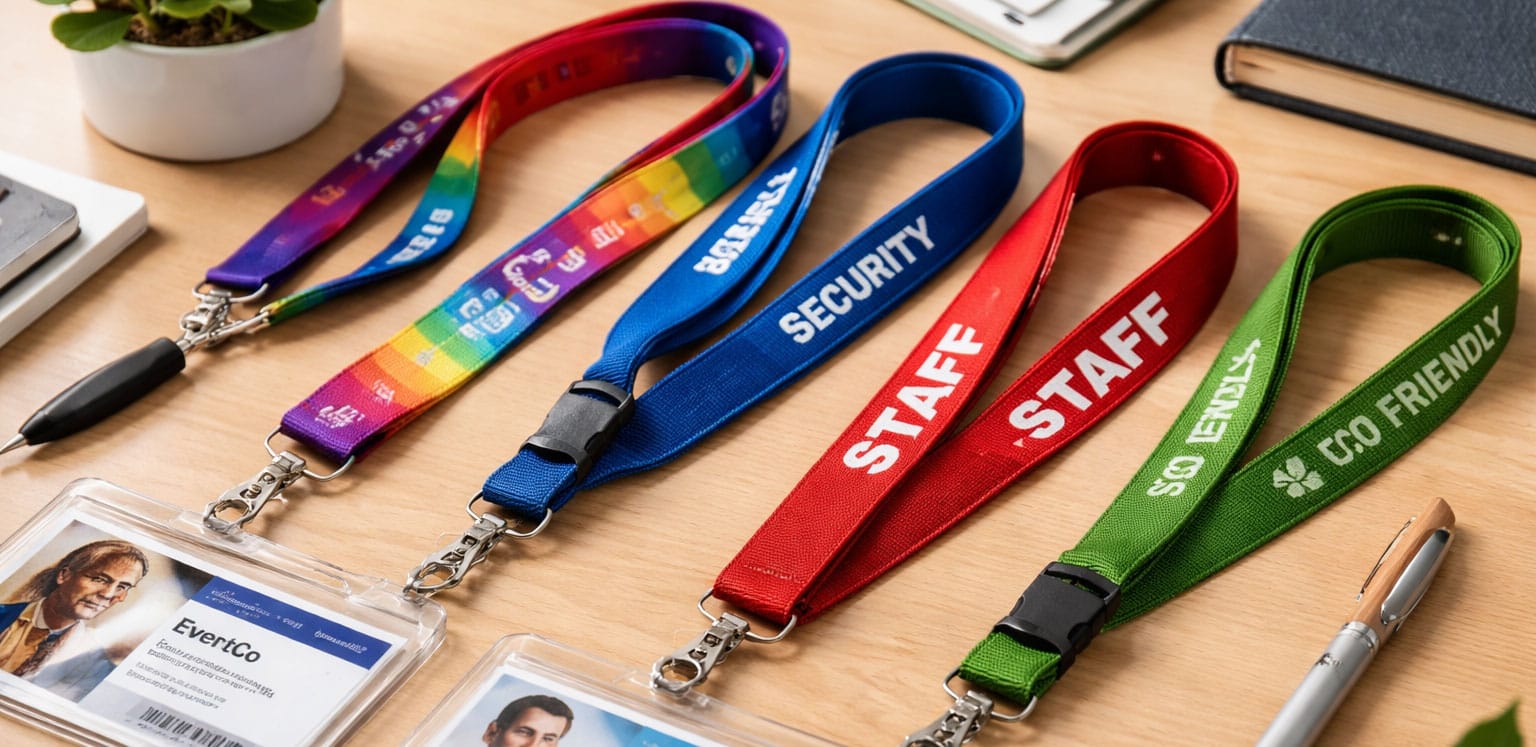
Sometimes lanyards can look similar in a picture but perform very differently in real life. Print method, material, stitching, attachment choice, and even artwork setup can change how a lanyard feels, how long it lasts, and how accurately it represents your brand.
This A-Z lanyard glossary aims to make those details clear. It explains the common terms you’ll encounter when choosing and ordering lanyards, with practical notes on when each option makes sense. The lanyard glossary is especially useful if you need a premium finish, tight colour control, or reliable performance in busy environments.
Use the glossary to decode lanyard terminology, then jump into the relevant products and guides to narrow down the right spec for your needs.
Tip: Click a term to expand/collapse the definition.
No terms match your search. Try a different keyword.
0-9
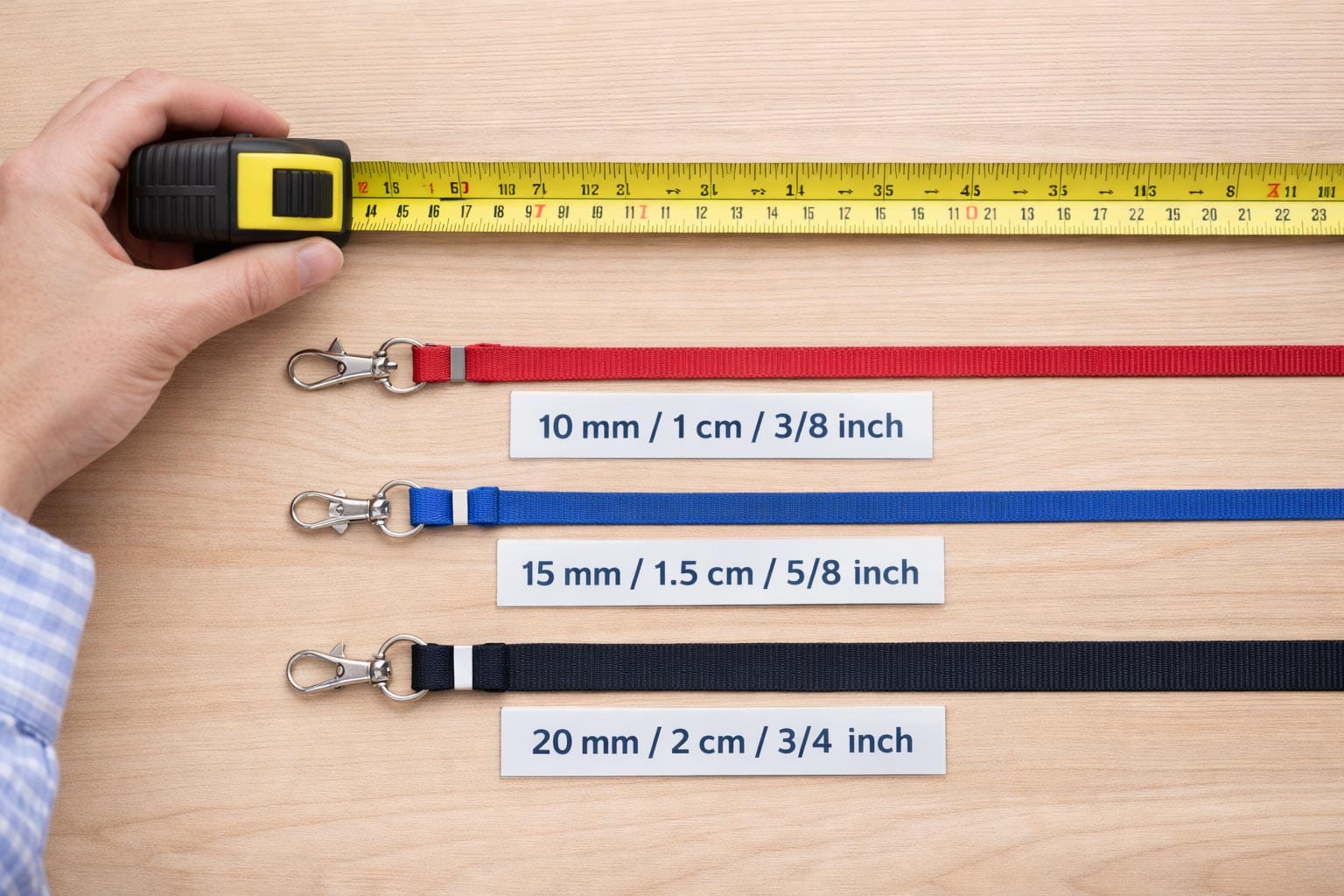
▸10mm width
A slim lanyard width that’s lightweight and discreet. Best for light ID cards; less space for large logos.
▸15mm width
A common everyday lanyard width that balances comfort and print visibility. A good default for staff ID use.
▸20mm width
A popular ‘event’ width with more branding space and better logo legibility at a distance.
▸25mm width
A wide, premium-feeling lanyard width that maximises branding impact. Can feel bulky for all‑day wear for some users.
A
▸A6 lanyard wallet
A larger PVC pouch format used for visitor passes, permits, schedules or printed tickets—usually A6 size.
▸A7 lanyard wallet
A smaller pouch format often used for visitor badges and compact passes—usually A7 size.
▸Accessories (lanyard)
Add-ons that change how a lanyard is used—e.g., badge reels, buckles, breakaways, clips and phone loops.
▸Adjustable slider
A plastic or metal adjuster used to change lanyard length or tighten the loop for comfort and safety.
▸AI / Adobe Illustrator file
A common vector artwork format suppliers prefer for crisp logos and accurate scaling. Getting this right prevents production delays: provide vector artwork where possible and approve the proof before anything goes to print.
▸Alligator clip
A toothed clamp clip (often called a bulldog clip) used for paper badges or laminated passes without holes.
▸Anti-microbial treatment
A material or coating designed to reduce microbial growth on the surface. Only meaningful if it’s tested and documented.
▸Artwork (print-ready)
Your final logo/design supplied in the correct format, colours and size so it can be produced without guessing.
▸Artwork proof
A visual mock-up showing how your design will look on the lanyard before production.
▸Attachment
The hardware on the end of the lanyard that connects to a holder, clip, or ring.
B
▸Badge reel (yo‑yo)
A retractable reel that lets someone present a badge to a reader without removing the lanyard.
▸Bamboo lanyard
A renewable-fibre option often used for eco-focused events. Check how branding is applied as methods vary.
▸Barrel lock
A small sliding lock used to tighten a cord lanyard loop. Often used on safety or promotional cord styles.
▸Black nickel clip
A dark, premium metal finish used on clips and fittings. Popular for high-end or minimalist branding.
▸Bleed
Extra artwork beyond the trim edge so full-coverage designs don’t show a white border if the cut shifts slightly.
▸Brand guidelines
Your rules for logo use, colours, and spacing. Sharing these avoids ‘close enough’ lanyards that annoy designers later.
▸Breakaway
A safety connector designed to release under force (for example if the lanyard snags), reducing choking risk.
▸Buckle / quick release
A clip-in connector that splits the lanyard into two parts. Handy when you need to detach a badge without removing the strap.
▸Bulk order
An order placed in larger quantities (often to reduce unit cost). Lead times and artwork approvals become more important at scale.
▸Bulldog clip
A clamp-style clip (sometimes ‘alligator clip’) used for laminated passes or paper badges without punched holes.
C
▸Carabiner
A spring-gate clip used for keys or equipment. More common on heavy-duty or outdoor lanyards than ID badge lanyards.
▸Carabiner clip
A carabiner-style end fitting for keys or tools. Stronger and more ‘utility’ than typical badge clips.
▸Chain lanyard
A metal chain-style lanyard. Durable and premium-looking, but heavier and less common for large-scale events.
▸CMYK
The four-colour print model (cyan, magenta, yellow, black) used for full-colour reproduction. It’s ideal for complex artwork, but it isn’t the same as matching a specific Pantone spot colour.
▸Colour fastness
How well colours resist fading from sunlight, washing, or friction. Important for outdoor events and daily staff wear.
▸Colour matching
The process of aligning print colours to brand colours. For lanyards this often involves Pantone references and tolerance expectations.
▸Comfort break
A small connector or section designed to reduce rubbing/pressure on the neck. More relevant for heavier setups (reels, holders).
▸Cord lanyard
A round cord-style lanyard (often nylon/polyester). Lightweight and neat, but offers less print area than flat straps.
▸Cotton lanyard
A natural-fibre strap option with a softer feel. Branding is usually screen print or woven; full‑bleed colour can be limited.
▸CR80 ID card
The standard ‘credit card’ ID size (about 85.6 × 54 mm). Most staff badges and access cards use this format.
▸Custom lanyards
Lanyards produced to your specification—colour, print method, width, attachments, safety features and accessories.
▸Cut-to-length
Lanyards produced to a specific length rather than a standard drop. Useful for children’s sizes or specific uniform requirements.
D
▸D-ring
A D-shaped metal ring used as an attachment point for clips, keys or accessories.
▸Detachable end
A built-in connector that allows the end section to be removed without taking the lanyard off your neck.
▸Digital proof
An on-screen proof (PDF/image) rather than a physical sample. Fast, but it won’t perfectly show real-world colour/texture.
▸Double-sided print
Branding printed on both sides of the strap. Useful when the lanyard twists or when you need messages facing both ways.
▸Double clip lanyard
A lanyard with two attachment points, usually used with landscape holders or heavier passes so the card sits flat and doesn’t spin.
▸Durability
How well the lanyard and print hold up to daily wear, cleaning, friction and snagging.
▸Dye sublimation
A full-colour print method where dye is heat-transferred into polyester fibres (so the colour becomes part of the fabric, not a layer sitting on top).
E
▸Eco lanyard
A lanyard made with recycled or renewable materials (e.g., rPET). Look for credible certification rather than vague ‘eco’ claims.
▸Edge-to-edge print
Printing that covers the full width of the lanyard strap (common with dye sublimation).
▸Edge stitching
Stitching along the strap edges for durability or a premium look. Can slightly stiffen the strap.
▸Embossed / debossed (accessories)
Raised or pressed-in detail—more common on PVC/silicone elements than on fabric straps.
▸Embroidered lanyard
Branding created with stitched thread rather than ink. Durable and tactile, but limited for tiny text and gradients.
▸Embroidery file (digitising)
The stitch-map created from your logo for embroidered products. Small detail can be lost during digitising.
▸End fitting
The metal or plastic part at the end of the strap that holds the attachment hardware.
▸EPS file
A widely accepted vector format for logos. Helps prevent blurry prints from low-res images.
▸EVA pouch
A soft, flexible pouch material often used for card holders. Can be clearer and softer than PVC, depending on spec.
▸Event lanyard
A lanyard specified for short-term, high-visibility use at conferences, festivals and exhibitions—often wider with bold branding.
F
▸Face mask / safety clip
A clip used to attach masks or other safety items. Sometimes integrated into lanyard systems in healthcare settings.
▸Fast turnaround
A shortened lead time option (if offered). Expect constraints on spec, quantity, or colour matching.
▸Flat polyester lanyard
A smooth, flat strap style that prints cleanly and sits comfortably. Very common for corporate and events use.
▸Fob (key fob)
A small accessory attached to keys/IDs. Lanyards often carry fobs via rings or clips.
▸Full-bleed print
Another term for edge-to-edge print. Typically easiest with dye sublimation.
▸Full colour
Designs with multiple colours, gradients or photos. Usually best achieved with dye sublimation on polyester.
G
▸Grommet / eyelet
A reinforced hole (often metal) used on passes or cards so they don’t tear when clipped.
▸GRS
Global Recycled Standard — a certification that helps verify recycled content and chain-of-custody for materials like rPET.
▸GRS certificate
Documentation that verifies recycled content and supply chain under the Global Recycled Standard. For eco procurement, it’s the difference between ‘recycled’ as marketing and ‘recycled’ as auditable fact.
H
▸Heat transfer
A process where printed artwork is transferred using heat and pressure. Often used as a general label for dye sublimation methods.
▸Hook
A general term for end attachments (e.g., swivel hook, trigger hook). Choice affects usability and perceived quality.
▸Hook-and-loop
A Velcro-style closure used on some strap systems. Less common on lanyards than on wristbands and accessories.
I
▸ID badge
A card/badge used for identification or access. Lanyards are the carrier; the badge size dictates holder choice.
▸ID holder
A pouch or rigid holder used to display and protect an ID card or pass.
▸Imprint area
The usable space on the strap where branding can be printed or woven. Depends on width and print method.
▸Ink coverage
How much of the strap is covered by ink/colour. High coverage can affect feel, cost, and durability depending on method.
▸Iron transfer
A cost-effective transfer method using a cut/printed film applied with heat. Best for simpler shapes and short runs.
J
▸Jacquard woven
A woven method that builds the design into the fabric. Premium and durable but limited by thread count and colour palette.
▸J‑hook
A popular lanyard end fitting that hooks onto holders or rings. Simple and effective for most ID setups.
K
▸Keyring (split ring)
A metal ring used to hold keys or small accessories. Common on key lanyards or multi-purpose straps.
L
▸Landscape holder
A holder designed for horizontal cards/passes. Often paired with a double clip lanyard for better stability.
▸Lanyard
A strap worn around the neck (or wrist) to carry ID, passes, keys or small tools—often branded for events or staff use.
▸Lanyard card
The actual badge/card carried—paper, plastic, laminated or PVC. Size and punch holes matter for attachments.
▸Lanyard clip
A category of metal/plastic fittings (lobster, trigger, swivel) that connect the strap to the holder or accessory.
▸Lanyard length
The drop/overall length of the lanyard. Standard lengths suit most adults but can be adjusted for comfort and safety.
▸Lanyard printing
The overall process of applying branding to the strap. Choose based on artwork complexity, volume and wear.
▸Lanyard safety
Features that reduce snag/choking risk—breakaways, child lengths, and appropriate hardware for the environment.
▸Lanyard wallet
Another term for a clear pouch/holder (often PVC) used for ID cards and passes.
▸Lanyard width
The strap width (e.g., 10/15/20/25mm). Wider straps show branding better; narrower straps are lighter and cheaper.
▸Laser engraving
A branding method used on metal clips or plates. Subtle and premium; not suitable for full-colour logos.
▸Lead time
The time from artwork approval to delivery. Print method, quantity and finishing options all affect lead time.
▸Lobster clip
A popular spring-loaded clasp (like a small carabiner) used for holders and key attachments.
▸Locking carabiner
A carabiner with an extra lock to prevent accidental opening. Niche, but useful for tools and security contexts.
▸Logo repeat (step-and-repeat)
A repeating logo pattern along the strap. Common for corporate lanyards and sponsorship-heavy event designs.
▸Logo size
How large your logo prints on the strap. Wider straps allow bigger logos and better legibility at distance.
▸Loop / phone loop
A small loop attachment used to connect phones or accessories. Often paired with safety features for everyday use.
M
▸Metal clip
A durable, premium-feeling attachment (lobster/trigger/swivel). Better for daily use than basic plastic clips.
▸Metal swivel
A swivel connector that reduces tangling. Often part of premium clip assemblies.
▸Minimum order quantity (MOQ)
The smallest quantity you can order at a given price/spec. Often varies by print method and customisation level.
▸Mock-up
A visual preview of the lanyard design (often part of a proof) showing logo placement, colours and finishing choices.
N
▸Name badge
A badge showing the wearer’s name/role. Usually held in a pouch/holder attached to a lanyard.
▸Neck strap
Another term for the lanyard strap itself, particularly in corporate/security contexts. When specifying this, think about the real use case (daily staff wear vs short event use) and what needs to be durable, comfortable…
▸NFC
Near Field Communication—used on some access cards. Lanyards don’t change the tech, but holders must not block scans.
▸Nylon
A strong, smooth material sometimes used for lanyards. Can feel premium and durable, with print options depending on finish.
O
▸OEKO‑TEX® Standard 100
A textile safety standard that tests for harmful substances. Relevant when lanyards contact skin for long periods.
▸Orientation
Portrait vs landscape holder direction. Impacts whether you need single or double clips.
▸Overprint
Printing on top of a base colour/area. Can affect legibility and colour accuracy if not planned.
P
▸Packaging (bulk vs individual)
How lanyards are packed. Bulk is cheaper; individual polybagging helps distribution and keeps items clean.
▸Pantone (PMS)
A standardised spot-colour system used for brand colour matching. If your organisation has ‘must-match’ brand colours, providing Pantone references reduces guesswork and helps you set expectations at proof stage.
▸PDF proof
A proof delivered as a PDF, useful for approvals and keeping a record of what was signed off.
▸Personalisation
Customising the lanyard with your branding, colour, attachments and features to fit a specific use case.
▸Photo ID
An ID card with a photo for security. Print clarity and holder transparency matter for quick checks.
▸Polybag
Individual plastic bag packaging. Useful for distribution at events or when keeping items clean in storage.
▸Polyester
The most common lanyard material—durable, comfortable and ideal for dye sublimation printing. When specifying this, think about the real use case (daily staff wear vs short event use) and what needs to be durable,…
▸Portrait holder
A holder designed for vertical cards/passes. Usually works well with a single clip lanyard.
▸Print method
How branding is applied—screen print, dye sublimation, woven/embroidered, transfers. Method affects cost and quality.
▸Print tolerance
Acceptable variation between batches (colour, placement, alignment). Important for strict brand standards and reorders.
▸Proof approval
Your sign-off that a proof is correct. After approval, production usually proceeds and changes become costly.
▸Proximity card
An access card that communicates with a reader (often RFID/NFC). Ensure holders don’t interfere with scanning.
▸PVC wallet
A clear plastic pouch used to hold ID cards, tickets or passes. Comes in multiple sizes and orientations.
Q
▸QR code
A scannable code that can be printed on passes or cards. Lanyards carry the card; print clarity matters for scanning.
▸Quality assurance (QA)
Checks to confirm print, assembly and spec are correct before dispatch. Especially important on bulk orders.
▸Quick attach
A clip system designed for fast attachment/removal (e.g., snap hook, buckle). Good for staff who swap badges.
R
▸REACH compliance
EU/UK chemical safety regulation often relevant for products in contact with skin. Useful reassurance for large organisations.
▸Registration (print)
Alignment between colour layers (screen print) or between front/back prints. Poor registration looks messy.
▸Retractable reel
See badge reel—lets users present a card without removing the lanyard. When specifying this, think about the real use case (daily staff wear vs short event use) and what needs to be durable, comfortable…
▸RFID
Radio-frequency identification used for access control and event systems. The lanyard is the carrier; the badge/card does the work.
▸Rigid holder
A hard plastic card holder that protects cards better than a soft wallet. Good for daily staff use.
▸rPET
Recycled polyester made from plastic bottles, used to reduce reliance on virgin polyester while keeping the same print benefits.
S
▸Safety buckle
A connector that releases under force (similar intent to a breakaway). Language varies by supplier—spec it clearly.
▸Sample (pre-production)
A physical example produced before the full run. Best option if colour accuracy and feel are critical.
▸Satin lanyard
A smooth, shiny finish that feels softer and looks premium. Print readability can vary depending on method and colour.
▸Screen printing
A spot-colour method where ink is pushed through a screen onto the strap. It’s excellent for bold logos, large text and repeat orders where consistency matters.
▸Silicone lanyard
A strap made from silicone, often used for bold, tactile designs. Heavier and less common than polyester for ID use.
▸Single clip lanyard
A lanyard with one end attachment, usually paired with portrait holders and lighter ID cards.
▸Snap hook
A hook-style clip with a spring latch. Often used as an alternative to lobster or trigger clips.
▸Soft-touch finish
A finish/coating that reduces friction and feels more comfortable. More common on accessories than on the strap itself.
▸Soft PVC
A flexible PVC material used for 3D logos or zip-style straps. Good for playful campaigns, but heavier than fabric.
▸Split ring
A keyring-style ring used for keys or accessories. Strong and simple, but slower to attach than a clip.
▸Sponsor logos
Multiple brand marks on one strap. Usually pushes you toward full-colour print methods for accuracy.
▸Spot colour
A single, solid ink colour (often Pantone-based). Typical for screen printed lanyards.
▸Standard length
The typical adult lanyard length used unless specified. If children will wear them, request shorter lengths.
▸Stitching
How the strap and fittings are secured. Strong stitching improves durability, especially with heavy holders or reels.
▸Swatch
A small reference sample of material or colour. Helpful when matching brand colours or finishes.
▸Swivel / anti-twist
Hardware or strap features that reduce twisting. Helpful when lanyards rotate frequently (busy staff environments).
▸Swivel hook
A rotating clip that helps prevent tangling. Useful for key lanyards and frequent badge turning.
T
▸Thermal transfer
A printing method where heat transfers a ribbon onto a surface. More common on labels; sometimes used on certain strap types.
▸Thick webbing
Heavier strap material that feels premium and withstands daily wear. Can increase comfort but adds cost.
▸Ticket holder
A wallet/holder sized for tickets or passes (A6/A7 are common). Often used for events and visitor management.
▸Tracking clip
A term sometimes used for clips used in access control setups (e.g., reels/holders).
▸Trigger clip
A spring-loaded clip with a ‘trigger’ lever. Easy to operate and often used on higher quality lanyards.
▸Tubular lanyard
A rounded, stitched tube strap. Comfortable and durable, typically better suited to screen printing than full-bleed dye sub.
U
▸UV resistant ink
Ink or dye spec designed to withstand sunlight exposure better. Relevant for outdoor use, festivals and long-wear items.
V
▸Vector artwork
Artwork built from shapes/paths rather than pixels, so it stays sharp at any size.
▸Visitor pass
A temporary badge carried in a holder/wallet (often A6/A7). Lanyards keep it visible and hands-free.
W
▸Waterproof wallet
A holder designed to resist water ingress. Useful for outdoor events, watersports or harsh environments.
▸Weave density
How tight the strap weave is. Denser weaves feel smoother and can print better; looser weaves can feel rougher.
▸Webbing
The woven strap material used to form many lanyards. Webbing type affects comfort, print, and durability.
▸Wide format logo
A logo layout that suits long, narrow spaces. Helpful when designing for step-and-repeat lanyard printing.
▸Woven lanyard
A lanyard where branding is woven into the fabric (often Jacquard). Long-lasting and premium, with some design limits.
▸Wrist lanyard
A shorter strap worn around the wrist for keys or small tools. Often uses a split ring or small clip.
Y
▸Yo‑yo reel
Another name for a badge reel—retractable cord for presenting badges. Hardware choice affects day-to-day usability: how quickly it clips on, whether it swivels to prevent twisting, and how secure it feels under load.
Z
▸Zinc alloy clip
A common metal type for clips. Can be strong and cost-effective; finish quality matters.
▸Zip lanyard
A lanyard style with a zipper feature (or zip-together function) used for playful campaigns or special use cases.